How to invest in the Trump-era small-caps boom, emotion free
January 2025
Back to InsightsSubscribe

How to invest in the Trump-era small-caps boom, emotion free

The Australian | Stockhead

24 January 2025

How to invest in the Trump-era small-caps boom, emotion free
  • Savana Asset Management believes US small caps are the ideal way to surf the Trump wave of business-friendly policies.
  • The firm has created an algorithm-driven ETF to tap value in an objective manner
  • The fund achieved an annualised 42% return over two years of simulated trading

With this week’s official dawning of the Trump Era part deux, there’s plenty of conjecture about the impact on local and global economies and stock markets. Trump’s first White House stint showed that what Donald says and what Donald does can be quite different, but Monday’s first-day flood of executive orders shows he means business. While the commentary centres on large tech stocks, cryptocurrencies and ‘drill baby drill’ explorers, Australian fund Savana Asset Management suggests US small caps as the ideal way to surf the business-friendly Trump Wave.

Small-cap US value stocks surged 5.27% the day after Trump’s election victory – the highest gain for any sector. Likely tailwinds include tax cuts, deregulation and – arguably – lower interest rates.

“Generally, small caps are more sensitive to changes in economic conditions and economic policies,” Savana’s associate director Samuel Atkinson says.

In a case of serendipitous timing Savana last November launched its US Small Caps Active Exchange Traded Fund (ASX code: SVNP), to trawl for hidden gems among thousands of New York and Nasdaq-listed small caps. Atkinson points to a gaping valuation gap between the small and big caps, with the former trading on an average earnings multiple of 15 times compared with 22 times for the latter. The Trump Effect aside, small caps have outperformed their larger brethren by an 2.85% a year on average since 1927. This week, Trump announced a $US500 billion fund, Stargate, to keep artificial intelligence in America.

Aptly, Savana’s fund decisions are made entirely by algorithms, which remove the subjective biases afflicting humanoid investors (such as whether they love or loathe Trump). The computers are loaded with basic data on every investible company – those above the firm’s minimum cut-off of a US$500 million market cap – and the algos take it from there.

“Whereas humans are subject to myriad cognitive and emotional biases in their decision-making, our algorithms are disciplined and fearless, ensuring unmatched precision in capitalising on mispriced assets,” Atkinson says.

Quirkily, the fund was not intended to be confined to the small caps – but that’s where the algos sniffed the best value. The ETF will invest in any sector and – like Trump himself – is not weighed down by ESG mandates (yep, ‘naughty’ companies are allowed). The fund currently has an initial $3.9 million across 30 investments, which can be expanded to 50.

Ahead of the launch, the firm tested out the algos with hypothetical paper trading over two years. The exercise achieved an annualised total return of 42% – 25% outperformance relative to the benchmark S&P total return index. The ‘real’ fund had early success with the quixotic Nebius, a Russian data centre and chip design company that re-domiciled to the Netherlands and listed on the Nasdaq. The fund invested in Nebius in early November last year, but flipped the stake in early January for a 61% gain after the algos “ruthlessly” deemed the shares as overcooked.

One potential spoiler is the prospect of Trump’s policies (notably tax cuts and tariffs) fuelling inflation, resulting in the need for higher interest rates. Small caps tend to be highly geared, or their valuation is based on inflation-adjusted assumptions of future earnings. Atkinson notes that Trump claimed his first term was a success because his favoured barometer – the stock market – fared well (as it did in the Biden era, just sayin’).

“Trump will be reluctant to impose any policies that are going to compromise the viability of the stock market,” he says.

This means that if tariffs spark inflation, even Trump’s signature policy will be watered down. Given Savana’s machine-driven approach is scaleable and replicable, the firm plans to launch local and global small cap ETFs later this year.

By Tim Boreham
Link to Original ArticleBack to Insights
Letter to Investors
January 2025
| © Savana Asset Management Pty Ltd
  • Savana Asset Management believes US small caps are the ideal way to surf the Trump wave of business-friendly policies.
  • The firm has created an algorithm-driven ETF to tap value in an objective manner
  • The fund achieved an annualised 42% return over two years of simulated trading

With this week’s official dawning of the Trump Era part deux, there’s plenty of conjecture about the impact on local and global economies and stock markets. Trump’s first White House stint showed that what Donald says and what Donald does can be quite different, but Monday’s first-day flood of executive orders shows he means business. While the commentary centres on large tech stocks, cryptocurrencies and ‘drill baby drill’ explorers, Australian fund Savana Asset Management suggests US small caps as the ideal way to surf the business-friendly Trump Wave.

Small-cap US value stocks surged 5.27% the day after Trump’s election victory – the highest gain for any sector. Likely tailwinds include tax cuts, deregulation and – arguably – lower interest rates.

“Generally, small caps are more sensitive to changes in economic conditions and economic policies,” Savana’s associate director Samuel Atkinson says.

In a case of serendipitous timing Savana last November launched its US Small Caps Active Exchange Traded Fund (ASX code: SVNP), to trawl for hidden gems among thousands of New York and Nasdaq-listed small caps. Atkinson points to a gaping valuation gap between the small and big caps, with the former trading on an average earnings multiple of 15 times compared with 22 times for the latter. The Trump Effect aside, small caps have outperformed their larger brethren by an 2.85% a year on average since 1927. This week, Trump announced a $US500 billion fund, Stargate, to keep artificial intelligence in America.

Aptly, Savana’s fund decisions are made entirely by algorithms, which remove the subjective biases afflicting humanoid investors (such as whether they love or loathe Trump). The computers are loaded with basic data on every investible company – those above the firm’s minimum cut-off of a US$500 million market cap – and the algos take it from there.

“Whereas humans are subject to myriad cognitive and emotional biases in their decision-making, our algorithms are disciplined and fearless, ensuring unmatched precision in capitalising on mispriced assets,” Atkinson says.

Quirkily, the fund was not intended to be confined to the small caps – but that’s where the algos sniffed the best value. The ETF will invest in any sector and – like Trump himself – is not weighed down by ESG mandates (yep, ‘naughty’ companies are allowed). The fund currently has an initial $3.9 million across 30 investments, which can be expanded to 50.

Ahead of the launch, the firm tested out the algos with hypothetical paper trading over two years. The exercise achieved an annualised total return of 42% – 25% outperformance relative to the benchmark S&P total return index. The ‘real’ fund had early success with the quixotic Nebius, a Russian data centre and chip design company that re-domiciled to the Netherlands and listed on the Nasdaq. The fund invested in Nebius in early November last year, but flipped the stake in early January for a 61% gain after the algos “ruthlessly” deemed the shares as overcooked.

One potential spoiler is the prospect of Trump’s policies (notably tax cuts and tariffs) fuelling inflation, resulting in the need for higher interest rates. Small caps tend to be highly geared, or their valuation is based on inflation-adjusted assumptions of future earnings. Atkinson notes that Trump claimed his first term was a success because his favoured barometer – the stock market – fared well (as it did in the Biden era, just sayin’).

“Trump will be reluctant to impose any policies that are going to compromise the viability of the stock market,” he says.

This means that if tariffs spark inflation, even Trump’s signature policy will be watered down. Given Savana’s machine-driven approach is scaleable and replicable, the firm plans to launch local and global small cap ETFs later this year.

By Tim Boreham

More Information

If you would like more information about this report or Savana, please contact enquiries@savana.ai. You can also speak to a member of the team below:
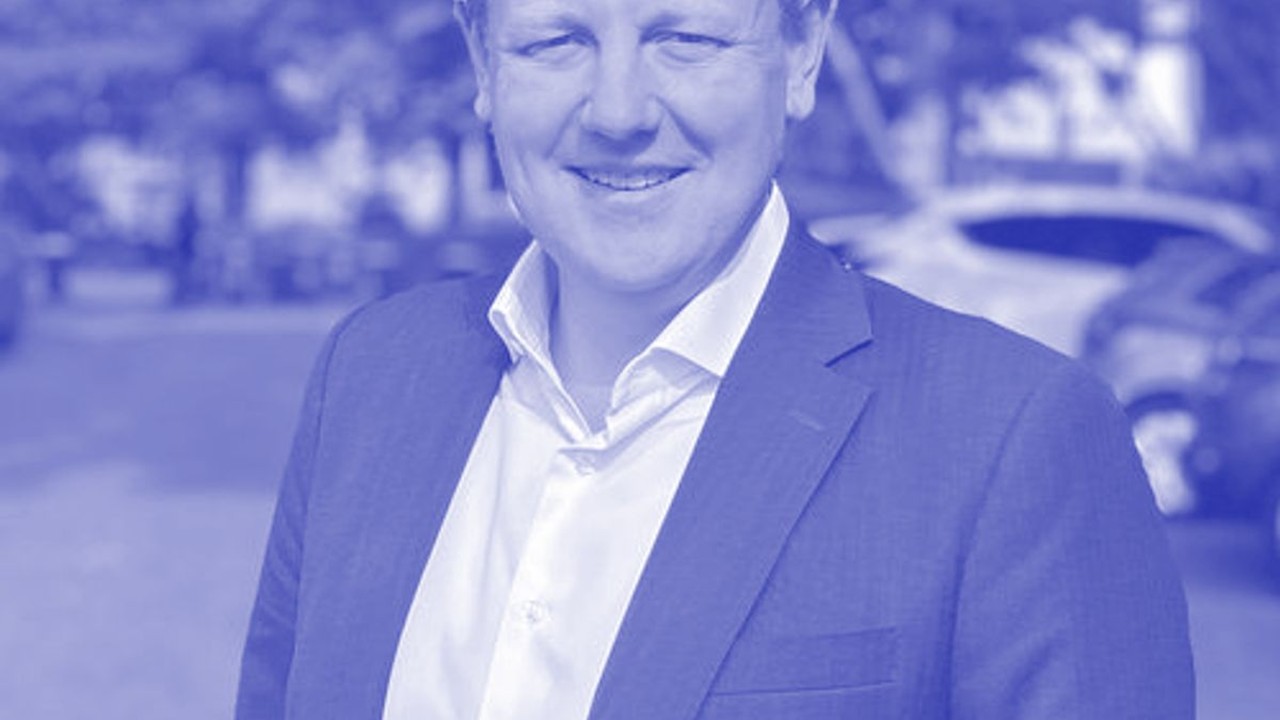
Marc Maasdorp, CEO of Savana ETFs.
Marc Maasdorp
Chief Executive Officer
marc.maasdorp@savana.ai
Samuel Atkinson, Associate Director of Savana ETFs.
Samuel Atkinson
Associate Director
samuel.atkinson@savana.ai
DISCLAIMER:
This document has been prepared by Savana Asset Management Pty Ltd (ABN 79 662 088 904) (Savana). Savana is acorporate authorised representative of Fat Prophets Pty Ltd (ABN 62 094 448 549AFS Licence No. 229183) (Fat Prophets), CAR Auth No. 1308949. The Savana US Small Caps Active ETF (ASX: SVNP) (ARSN 649 028 722) is issued by K2 AssetManagement Limited (K2) ABN 95 085 445 094, AFS Licence No 244393, a wholly owned subsidiary of K2 Asset Management Holdings Limited (ABN 59 124 636 782). The information contained in this document is produced in good faith and does not constitute any representation or offer by K2, Savana or Fat Prophets. This material has been prepared for both retail and wholesale investors and is for information purposes only. It is not an offer or a recommendation to invest and it should not be relied upon by investors in making an investment decision. Offers to invest will only be madein the product disclosure statement (“PDS”) available from www.savana.ai and this material is not intended to substitute the PDS which outlines the risks involved and other relevant information. Any investment carries potential risks and fees which are described in the PDS. A Target Market Determination has been prepared for this product and is available from the same website. An investor should, before deciding whether to invest, consider the appropriateness of the investment, having regard to the PDS in its entirety. This information has not been prepared taking into account your objectives, financial situation or needs. Past investment performance is not a reliable indicator of future investment performance. No representation is made as to future performance orvolatility of the investment. In particular, there is no guarantee that the investment objectives and investment strategy set out in this presentation may be successful. Any forward-looking statements, opinions and estimates provided in this material are based on assumptions and contingencies which are subject to change without notice and should not be relied upon as an indication of the future performance. Persons should rely solely upon their own investigations in respect of the subject matter discussed in this material. No representations or warranties, expressed or implied, are made as to the accuracy or completeness of the information, opinions and conclusions contained in this material. In preparing these materials, we have relied upon and assumed, without independent verification, the accuracy and completeness of all information available to Savana. To the maximum extent permitted by law, all liability in reliance on this material is expressly disclaimed. This document is strictly confidential and is intended solely for the use of the person to whom it has been delivered. It may not be reproduced, distributed or published, in whole or in part, without the prior approval of Savana.
See in PDFBack to Insights

How to invest in the Trump-era small-caps boom, emotion free

24 January 2025
  • Savana Asset Management believes US small caps are the ideal way to surf the Trump wave of business-friendly policies.
  • The firm has created an algorithm-driven ETF to tap value in an objective manner
  • The fund achieved an annualised 42% return over two years of simulated trading

With this week’s official dawning of the Trump Era part deux, there’s plenty of conjecture about the impact on local and global economies and stock markets. Trump’s first White House stint showed that what Donald says and what Donald does can be quite different, but Monday’s first-day flood of executive orders shows he means business. While the commentary centres on large tech stocks, cryptocurrencies and ‘drill baby drill’ explorers, Australian fund Savana Asset Management suggests US small caps as the ideal way to surf the business-friendly Trump Wave.

Small-cap US value stocks surged 5.27% the day after Trump’s election victory – the highest gain for any sector. Likely tailwinds include tax cuts, deregulation and – arguably – lower interest rates.

“Generally, small caps are more sensitive to changes in economic conditions and economic policies,” Savana’s associate director Samuel Atkinson says.

In a case of serendipitous timing Savana last November launched its US Small Caps Active Exchange Traded Fund (ASX code: SVNP), to trawl for hidden gems among thousands of New York and Nasdaq-listed small caps. Atkinson points to a gaping valuation gap between the small and big caps, with the former trading on an average earnings multiple of 15 times compared with 22 times for the latter. The Trump Effect aside, small caps have outperformed their larger brethren by an 2.85% a year on average since 1927. This week, Trump announced a $US500 billion fund, Stargate, to keep artificial intelligence in America.

Aptly, Savana’s fund decisions are made entirely by algorithms, which remove the subjective biases afflicting humanoid investors (such as whether they love or loathe Trump). The computers are loaded with basic data on every investible company – those above the firm’s minimum cut-off of a US$500 million market cap – and the algos take it from there.

“Whereas humans are subject to myriad cognitive and emotional biases in their decision-making, our algorithms are disciplined and fearless, ensuring unmatched precision in capitalising on mispriced assets,” Atkinson says.

Quirkily, the fund was not intended to be confined to the small caps – but that’s where the algos sniffed the best value. The ETF will invest in any sector and – like Trump himself – is not weighed down by ESG mandates (yep, ‘naughty’ companies are allowed). The fund currently has an initial $3.9 million across 30 investments, which can be expanded to 50.

Ahead of the launch, the firm tested out the algos with hypothetical paper trading over two years. The exercise achieved an annualised total return of 42% – 25% outperformance relative to the benchmark S&P total return index. The ‘real’ fund had early success with the quixotic Nebius, a Russian data centre and chip design company that re-domiciled to the Netherlands and listed on the Nasdaq. The fund invested in Nebius in early November last year, but flipped the stake in early January for a 61% gain after the algos “ruthlessly” deemed the shares as overcooked.

One potential spoiler is the prospect of Trump’s policies (notably tax cuts and tariffs) fuelling inflation, resulting in the need for higher interest rates. Small caps tend to be highly geared, or their valuation is based on inflation-adjusted assumptions of future earnings. Atkinson notes that Trump claimed his first term was a success because his favoured barometer – the stock market – fared well (as it did in the Biden era, just sayin’).

“Trump will be reluctant to impose any policies that are going to compromise the viability of the stock market,” he says.

This means that if tariffs spark inflation, even Trump’s signature policy will be watered down. Given Savana’s machine-driven approach is scaleable and replicable, the firm plans to launch local and global small cap ETFs later this year.

By Tim Boreham
Back to Insights